
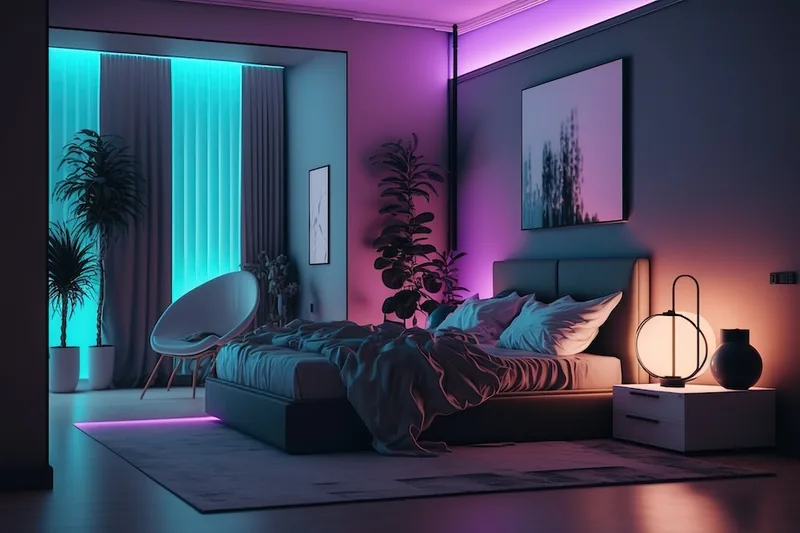
Start with a gentle light behind the screen
A concealed light behind the TV can illuminate the wall without shining directly into the viewer's eyes. Keep the source out of sight from the seats and choose a brightness that complements the picture. The result should remain comfortable when the program changes from a bright scene to a dark one.
Use adjustable room lighting
A shaded floor lamp or dimmable wall light can provide enough illumination to move around the room. Position it outside the screen's main reflection path. Check from side seats too; a lamp invisible in the picture from the center can reflect strongly from another angle.
Keep decorative effects optional
Color-changing lights can suit games or parties, but fast effects can be distracting during films or subtitles. Give yourself a simple neutral or low-brightness setting for everyday viewing, with controls you can reach easily.
Plan power and attachment
Check the lighting product's instructions before attaching it to the TV cabinet. Do not cover ventilation slots or interfere with the mount's release mechanism. Use an appropriate power source and secure the cables without straining connectors or trapping them in moving joints.
Test before fixing everything in place
Try the arrangement after dark and in daylight, with the curtains in their usual position. Adjust light placement first, then TV brightness. If a reflection remains, compare a modest screen-angle change with moving the lamp rather than immediately relocating the entire bracket.
For a broader room check, see our TV lighting guide. Ambient lighting is a design choice; it does not require a different structural mounting method.