
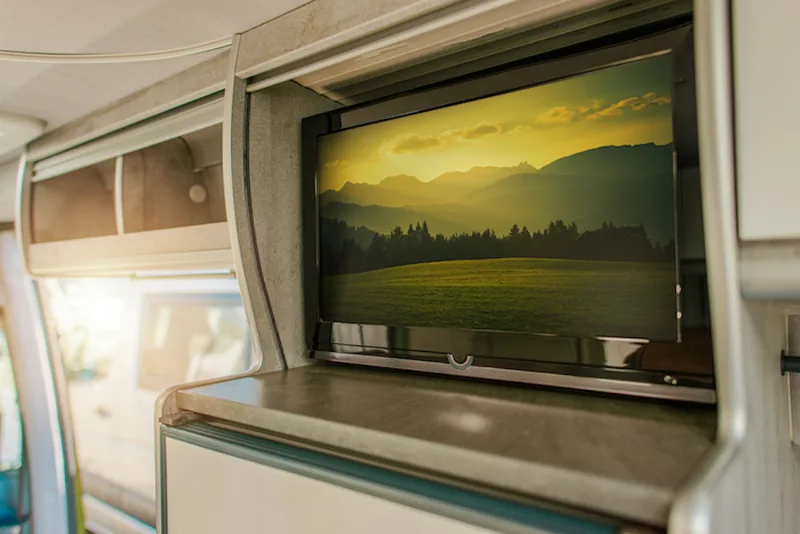
Vehicle walls are different from house walls
A camper or RV may have thin finishes, specialized framing and designated reinforced mounting locations. Do not assume the wall can accept a residential TV bracket. Start with the vehicle manufacturer's information about the approved TV location and load.
Account for travel
A television in a moving vehicle experiences conditions that a stationary living-room installation does not. Choose hardware explicitly suitable for the application and follow the instructions for locking or stowing it during travel. A freely swinging residential arm is not a substitute for a travel-ready arrangement.
Keep the TV within practical limits
Compare the display's weight and outer dimensions with the vehicle's allowed installation. Check cabinet doors, slide-outs, seating and walking space in both parked and travel configurations. A larger screen can interfere with features that are easy to overlook when the vehicle is stationary.
Plan power and wiring
Use a power arrangement compatible with the TV and vehicle system. Protect cables from pinching during movement or stowage, while retaining ventilation and access to connections. Have specialized electrical or vehicle-structure questions handled by the appropriate technician.
Confirm the project before booking
Send the RV make, model, year, approved mounting information, and TV and bracket models. Specialized vehicle work needs a suitability review; do not assume that a residential mounting appointment automatically covers it.
This planning checklist is not a universal drilling guide. The vehicle construction and equipment instructions determine whether, where and how a TV can be attached.