
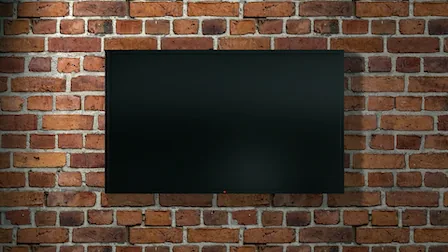
Find out what kind of brick wall you have
Solid masonry, hollow brick and a decorative veneer are different supporting conditions. A brick-looking face does not establish its thickness, condition or structural role. Inspect the actual construction before selecting a bracket and fastening system.
Let the approved fastening method set the details
The choice of anchor, embedment, hole preparation and attachment location depends on the masonry and mount instructions. Do not assume that fastening into mortar is always acceptable or that every brick anchor suits hollow material. A weathered, cracked or uncertain surface needs assessment before drilling.
Plan the cable appearance early
Solid masonry often does not offer the same accessible cavity as a framed wall. An external cable cover may be more practical than trying to conceal cables within the structure. Keep power arrangements separate from signal-cable routing and use appropriate electrical help when needed.
Check fireplace conditions separately
A brick chimney breast introduces heat, clearances and potentially concealed flue-related constraints. Confirm the fireplace and television requirements and investigate the proposed drilling area. A mantel does not automatically make the location suitable for a TV.
Before the appointment
Share wide and close-up wall photos, the TV and bracket models, and any information about the wall's construction. Identify where the power and source devices are located. If drilling permission is required, obtain it before scheduling the installation.
A photograph can help plan the visit, but cannot prove masonry strength. The final attachment method must be based on the wall and the manufacturer's permitted installation conditions.