
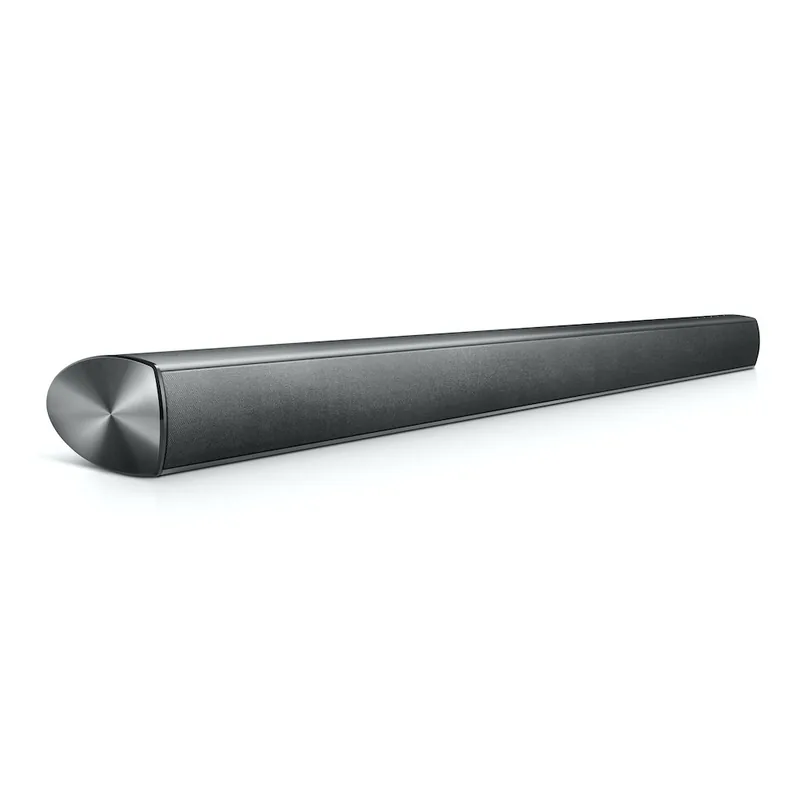
1. Check the soundbar's placement instructions
Speaker directions and clearance requirements vary by model. For example, Sonos specifies a minimum gap below the TV for Arc wall mounting. Use your own soundbar's instructions rather than applying one gap to every product.
2. Choose wall attachment or TV-bracket attachment
A soundbar can sometimes attach independently to the wall or use a compatible accessory that moves with the TV. Check the approval and load requirements for the complete combination. An accessory that physically fits is not necessarily suitable.
3. Mark the complete arrangement
Outline both devices before mounting. Keep the soundbar centered with the picture where practical, while leaving required speaker, control and ventilation clearances. Do not cover upward- or side-firing speaker paths.
4. Plan sound and power connections
Identify the TV port required for the intended HDMI ARC/eARC connection, or the supported alternative. Check cable lengths and power access. A moving TV-and-soundbar assembly needs slack throughout its travel.
5. Use the specified support
Follow the soundbar bracket and wall-attachment instructions. Keep release mechanisms and connectors accessible. Do not place the soundbar on improvised supports or rely on the TV bezel to carry it.
6. Test the system before finishing
Check sound from each source, volume control, input switching and any supported setup process. Follow the manufacturer's instructions for room tuning if available.
Provide both model numbers when requesting soundbar mounting. Our Pebble Beach project shows an 85-inch TV with a soundbar underneath.