Six Benefits of Using a Tilting TV Mount This is a common question when planning a TV setup. A tilting mount is useful when the TV is mounted somewhat above the primary eye line or when a small vertical angle adjustment helps reduce reflections. It keeps more of a low-profile look than many full-motion mounts.
The best result comes from treating the TV, mount, wall and room as one installation rather than four separate decisions.
What to consider
- Vertical Viewing-Angle Adjustment: consider how it affects this particular TV, wall and room.
- Screen Height: consider how it affects this particular TV, wall and room.
- Glare Control: consider how it affects this particular TV, wall and room.
- Wall Clearance For Cables: consider how it affects this particular TV, wall and room.
Plan the installation before drilling
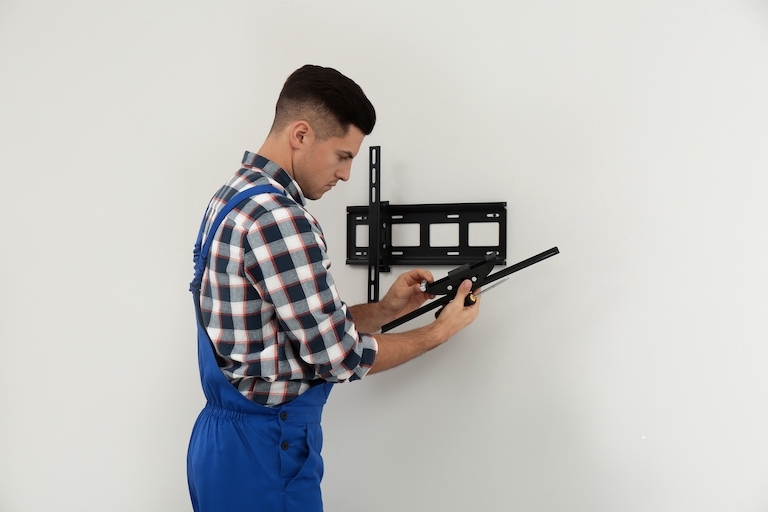
Confirm the television model, weight, VESA pattern and mounting hardware first. Then identify the intended viewing position and the wall or structural attachment points. If the screen is large or the mount articulates away from the wall, the installation can place substantially more leverage on the attachment points than a small fixed screen.
Also decide how power and signal cables will reach the TV. If an in-wall cable route is being considered, the wall must be evaluated separately; do not assume that every cable or power cord can simply be placed inside a wall.
When professional installation makes sense
Professional help is particularly useful when the TV is large or difficult to lift, the wall construction is uncertain, the mount has a long extension, the installation is above a fireplace, or cable concealment and accessory mounting are part of the project. A technician can evaluate the actual installation conditions rather than relying only on general online guidance.
TV Installation Pros
Need help with your installation?
Call or text with the TV size, city, wall type if known, and the type of mount or cable work you are considering.
Call (831) 296-4343