
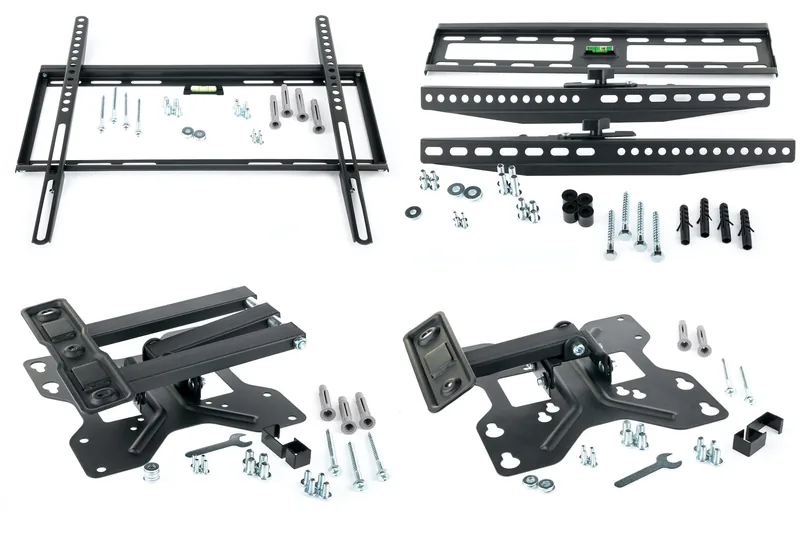
Define what the bracket needs to do
The best mount is the compatible one that provides useful movement without adding unnecessary complexity. If the TV faces one seating area at a comfortable height, a fixed bracket may be sufficient. If you need to aim the screen downward, consider tilt. If the television must face more than one area, compare full-motion options.
Use a three-part selection process
- TV fit: confirm weight, VESA spacing and the specified attachment hardware.
- Wall fit: verify the mount is approved for the actual supporting construction.
- Room fit: check movement, folded depth, cable access and the screen's clearance from nearby objects.
Look beyond the headline swivel angle
A bracket's stated movement does not mean every TV can reach that angle on every wall. A wide television can touch the wall before the arm reaches its limit. The wall-plate location, arm length and adjacent furniture all affect usable movement.
Plan for servicing
Low-profile mounts may make rear connections harder to reach. Full-motion mounts provide access when extended, but cables need enough slack and a route that cannot become pinched. Make sure the release latches or straps remain reachable after installation.
Keep the mount purchase open until you have checked the TV and wall together. You can provide a compatible bracket or ask TV Installation Pros about bringing one. Share the model number and whether you need tilt, swivel or a particularly shallow appearance when requesting service.