
Do not let the furniture dictate an uncomfortable height
A television can look balanced above a tall cabinet while being uncomfortable to watch from the sofa. Test a full-size outline from your actual seats. If the only way to see the screen is to tilt your head upward continuously, reconsider the furniture or wall rather than assuming a tilting mount will solve the height.
Keep heat and moisture in the decision
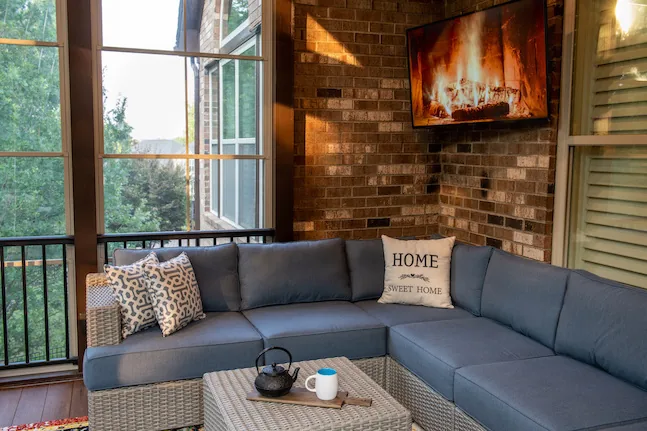
Fireplaces, cooking areas, damp spaces and uncovered patios need closer evaluation than a typical living room. The specific TV's operating limits and installation instructions govern the location. A covered patio does not automatically make an indoor television suitable for outdoor use.
A decorative surface is not proof of support
Shiplap, tile, stone veneer and plaster describe the visible finish. They do not tell you what will carry the TV. Avoid choosing attachment hardware from the surface appearance alone. A hollow area or uncertain backing needs investigation before the mount is installed, especially if the bracket extends away from the wall.
Avoid trapping the equipment
A tight recess may obstruct ventilation, cable connections or the release straps needed to remove the TV. Leave the clearances required by the TV and bracket. Check the path of a moving mount against shelves, doors and the mantel, including cable slack at full extension.
Watch for everyday friction
- Direct reflections that overwhelm the picture at your usual viewing time.
- A screen projecting into a walkway when turned.
- A location that needs exposed cables across a door or traffic route.
- Controls, outlets or equipment that become inaccessible after mounting.
A slightly different wall position can resolve several of these problems together. Our room-placement guide provides a comparison process before you commit to holes or a new bracket.