
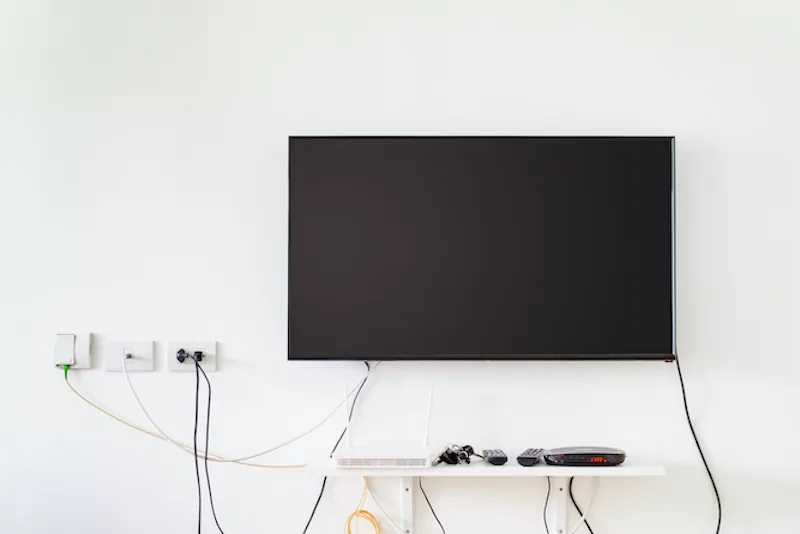
Choose the finish that suits the wall
There are two main approaches: organize cables in a surface-mounted cover, or use an appropriate in-wall route. The cleaner-looking option is not automatically the right one for every wall. Construction, access, power and the cables themselves determine what is practical.
External cord covers
A surface cover can guide cables from the TV to a console or outlet without creating a hidden route through the wall. It is useful when cavity access is limited or wall openings are undesirable. Confirm how it attaches and whether its finish can be painted; removal may still leave marks.
In-wall signal cables
An in-wall route must be assessed for obstructions and use cables appropriate for that installation. Plan the equipment locations, needed cable length and accessible exit points. Leave a workable way to service or replace cables rather than sealing every connection out of reach.
Power needs a separate solution
Do not put the television's ordinary power cord or an extension cord inside the wall. A suitable listed power-relocation system, or an appropriately installed outlet, may be an option depending on the wall and requirements. Electrical work outside the agreed scope should be handled by a qualified electrician.
Allow movement and future changes
A full-motion bracket needs enough slack to extend and turn without pulling on sockets. Decide whether you will add a console, receiver or soundbar later. Test the picture and sound before the final cable tidy-up.
See our cable-concealment service for the details to include in a quote request, and Carmel projects for a documented external-cover example.