
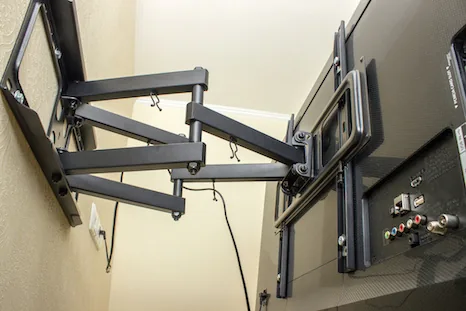
1. Identify the bracket
Look for a model label and obtain the matching manual. If the bracket cannot be identified, its appearance alone cannot establish its capacity or permitted installation method. Keep any purchase record or original instructions.
2. Compare the supported load
Use the television's weight without the stand and account for accessories attached to the bracket as the manufacturers direct. Check both the weight limit and VESA range. Neither one replaces the other.
3. Confirm that every part belongs
Missing rails, substituted bolts, homemade extensions or mixed parts from different mounts can invalidate assumptions about the assembly. Reuse only components specified for that mount and television.
4. Inspect its condition
Look for distortion, cracking, corrosion, damaged threads and loose or missing locking hardware. Do not treat a previously successful installation as proof that damaged hardware is still suitable. Avoid loading a questionable bracket while you investigate it.
5. Verify the supporting attachment
The wall plate must be secured to construction permitted by the mount instructions using the appropriate method. A high load rating on the box is not a rating for whichever anchors happen to be in the wall.
Do not hang from the bracket or add improvised test weights to prove strength. If the TV is leaning, the wall is cracking or the bracket has moved, stop adjusting it and arrange a safe assessment. A professional can inspect the mount and wall together before a replacement TV is fitted.